
 By Talia DeArmitt
The Scene staff
A couple of months ago, a good friend gave me this old yellowing book, Jon Berger’s “Ways of Seeing” (published 1972).
Inside were several essays meant to raise questions about how people relate to images. One stuck out to me, mainly because of how relevant it is to five movies that just came out this year.
The essay asked the question, “How has the invention of the photograph impacted the way peo copied endlessly. Hundreds of gigantic paintings could be shrunk down to fit inside a pocketbook. The barrier between art and the outside world had broken down.
This impacted artists just as much as viewers. Art was made differently because of the photograph. To put it poetically, the soul of the art had been separated from the body of the art, and it was now able to travel the world with ease.
This story has distinct parallels to what is currently happening to modern film.
For much of their history, films existed as paintings did before the photograph. Films demanded that audiences travel to them.
 If you wanted to see a movie, you had to go to a building specifically designed to show it. The line between the outside world and the art inside a movie theater was distinct and clear.
But this distinction was killed with two blows.
One was the invention of video-cassette recordings and later digital-video discs. No longer did you have to leave your house. You could just pop in a VCR tape or DVD and enjoy a movie at home.
Second came the internet. A movie didn’t even need to be put on a tape or disc but simply uploaded for all to access online.
In the past 20 years, these two factors have changed how filmmakers relate to films, in much the same way the invention of the photograph changed how artists related to paintings.
Before the photograph, aspiring artists saw art existing inside its own specific context. Before home movies, aspiring filmmakers saw movies as something existing inside a theater.
But now, movies have escaped the cinema’s walls. They play on our television sets, phones and computers.
This year, five young filmmakers released films that really reflected this cultural evolution. The movies are clearly made by people who relate to film and create films in a distinctly online way.
- “Iron Lung” (released Jan. 30). Writer, director and star Mark Fischbach is famous for recording himself playing scary video games online. The movie is an adaptation of a 2022 horror video game that Fischbach recorded himself playing only four years ago. “Iron Lung” works as a spiritual continuation of Fischbach’s online work.
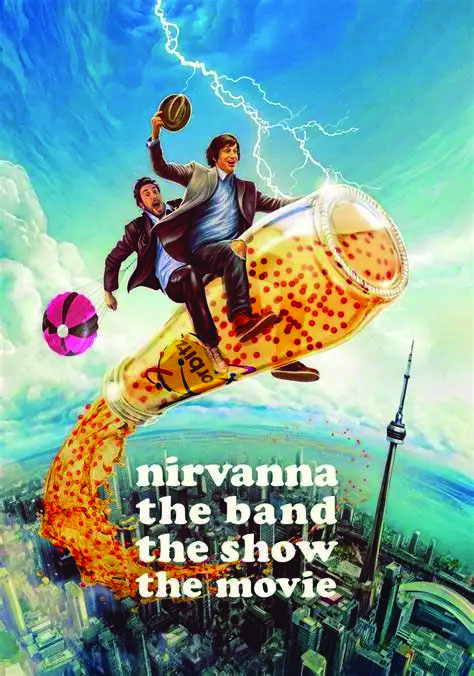
- “Nirvanna the Band the Show the Movie” (released Feb. 13). This movie began as an online web show 17 years before its release. And unlike “Iron Lung,” it’s a direct continuation of the web show, featuring the same characters and tone. It picks up right where the show left off.
- “Obsession” (released May 15). Curry Barker, the movie’s writer, director and star, and Cooper Tomlinson, another actor, both began making sketch comedy and horror films online. “Obsession” continues their blend of comedy and horror on a much larger scale.
- “Backrooms” (released May 29). The rise of abandoned malls, deteriorating houses and overall suburban decay during the late 2010s created a distinct cultural aesthetic that embedded itself with millions who grew up in that era. “Backrooms” director Kane Parsons captured it wonderfully in early short films he released on YouTube, which also featured the “Backrooms” setting. Parson’s new film is again a direct continuation of these early efforts, with the story picking up right where the online films left off.
- “The Amazing Digital Circus: The Last Act” (released June 4). This is Gooseworx’s conclusion to an online web show that she began airing three years ago. It is beyond a continuation; it is a direct episodic sequel to the strictly online web show.
These five films are wildly different, but all share a common thread. They show the arrival of a new generation of filmmakers who marinated in an online ecosystem and are continuing this work on theater screens.
These young and eager creatives are breaking down the barriers between traditional cinema and online film, and I am eager to see this new era of modern cinema.