By Robbie Chamberlain
The Scene staff
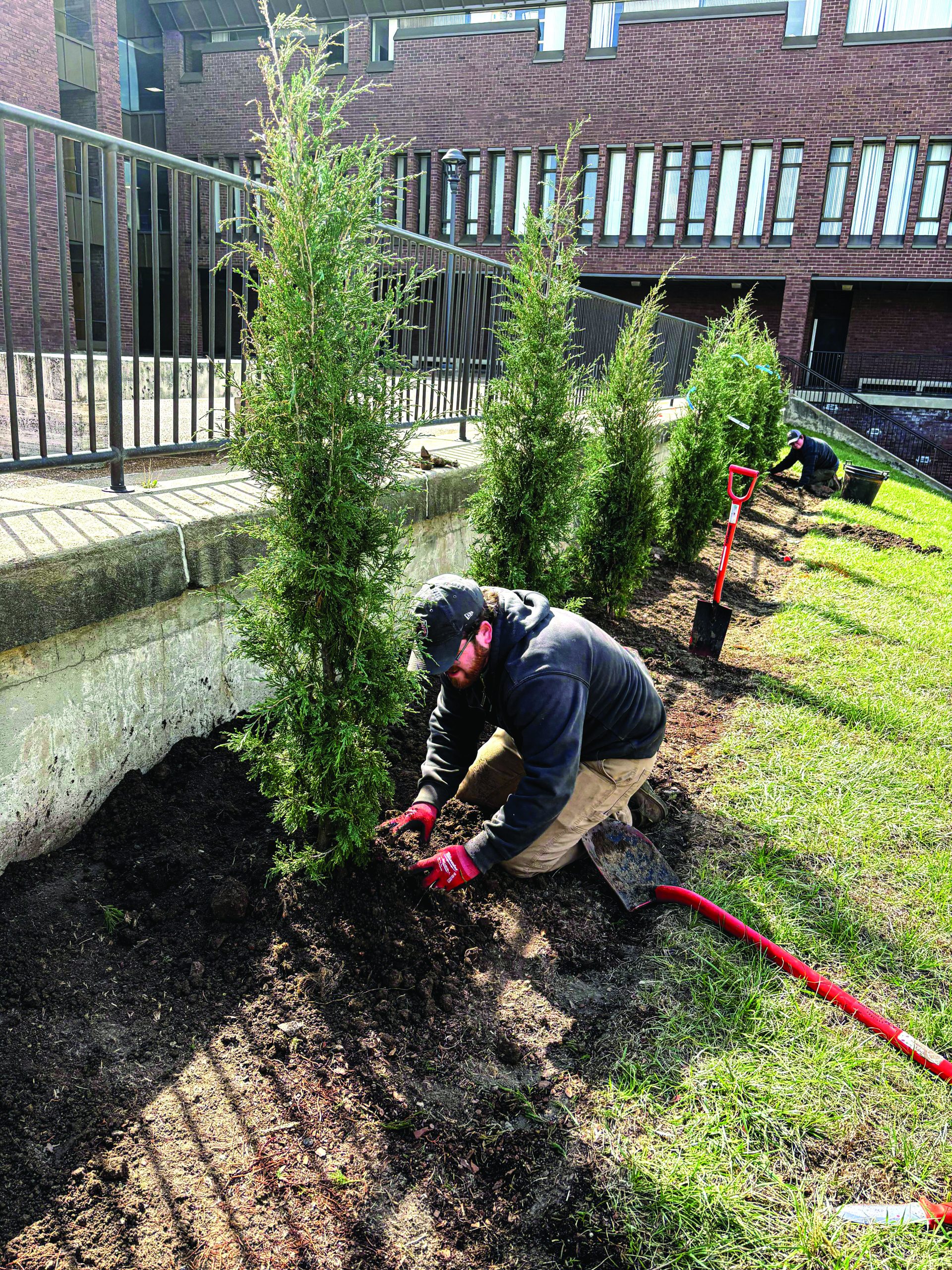
The Forest Park grounds crew has begun planting the seeds for a makeover of the campus landscape.
This spring, workers planted 47 trees, using a $9,491 grant that St. Louis Community College received from the Missouri Department of Conservation.
Some of the new saplings have replaced 24 dead or dying trees, according to Joe Enger, supervisor of Forest Park grounds. Others fill empty spaces on campus.
Many of the problem trees were bald cyprus trees planted during construction of the Center for Nursing and Health Sciences in 2019.
“If there was something they could have done wrong in the planting process, they did,” Enger said. “The contractor did not practice best practices when planting the trees. They went into decline or died.”
Many of the trees were planted too deep and mulched too high, Enger said. He also suspects that they weren’t watered enough for the first couple years of growth.

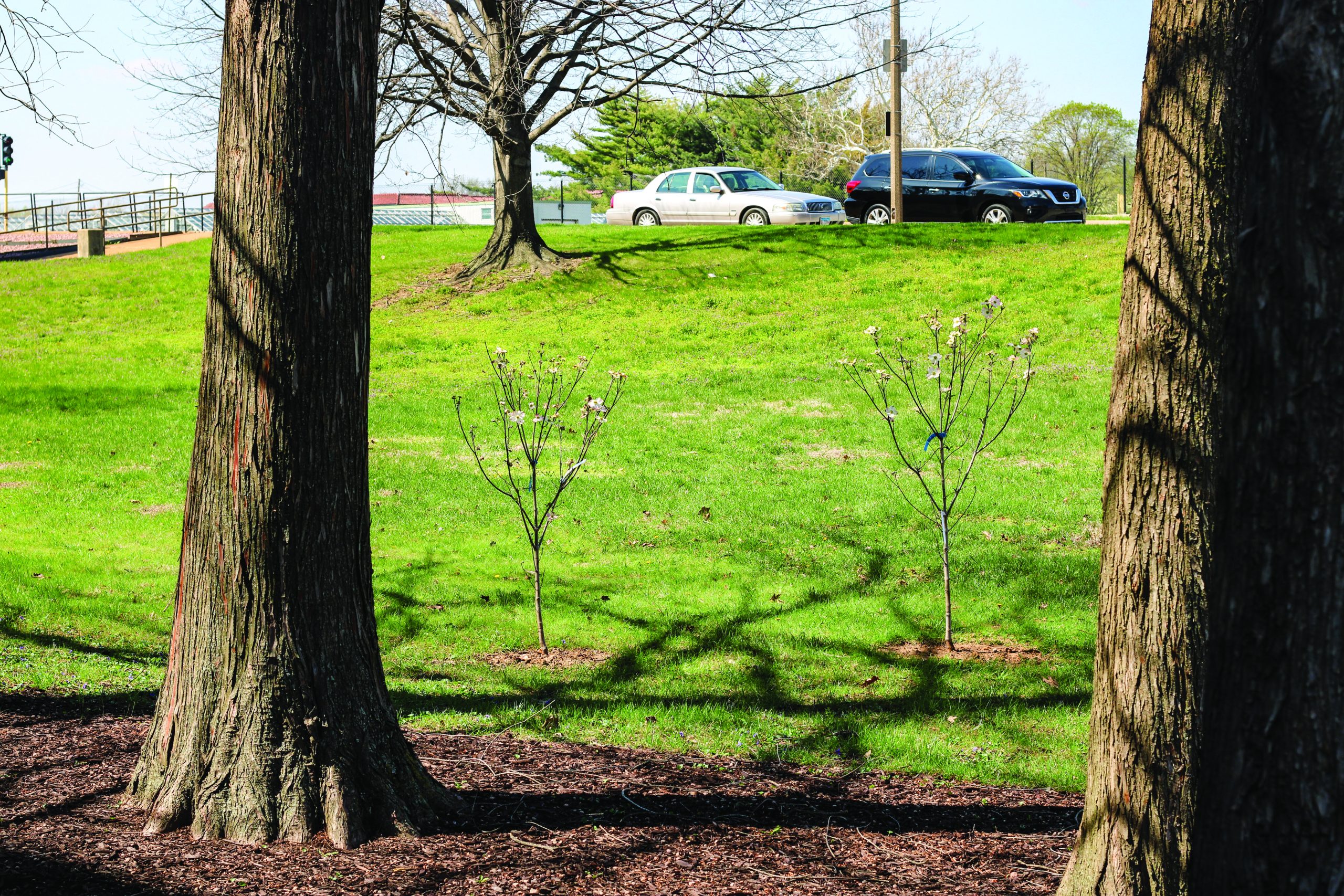
The problem trees have been replaced by a mix of Kentucky coffeetrees, redbuds, dogwoods and a couple of bald cyprus trees. There are also 20 new eastern red cedars and two white oaks.
The grounds crew also planted trees that they already had in storage, including a new line of evergreens on the west side of campus, along Highlander Drive. The idea is to eventually block wind gusts from roaring through the quad.
Planting 47 trees was a challenge for the only two full-time Forest Park groundskeepers. They decided to take it “bit by bit,” beginning on March 2 and wrapping up by late April.
“Removing (the old trees) has been tough, but we’ve been getting new trees in that we’ve been able to take our time with and plant them how we want to,” said groundskeeper Josh Cusick. “So hopefully they’ll live for much longer than the old trees.”
Landscaping woes
The Scene has previously reported problems with loss of foliage and neglected landscaping around campus.
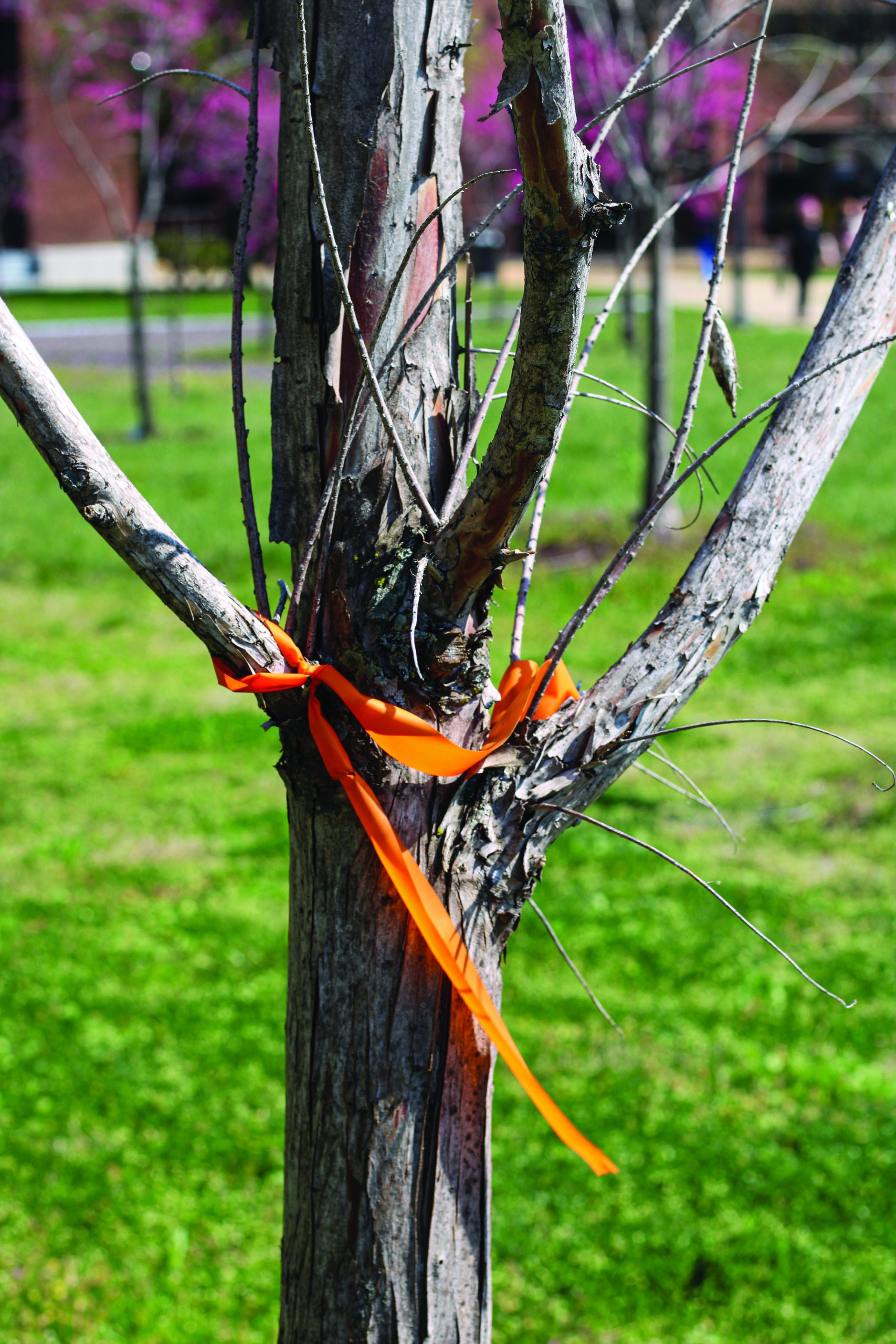
In recent years, groundskeepers stopped planting colorful flowers in planters and landscaping beds each spring. They also removed bushes and other plants due to “disease, overgrowth and unsustainability,” college officials maintained at the time.
In 2020, workers cut down more than 30 ash trees along Campus Drive, south of the parking garage, that were damaged from an infestation of emerald ash borer beetles.
Some Forest Park students and employees have commented that the dead and dying trees and lack of flowers were negatively affecting the look and feel of campus.
One group trying to add natural beauty is the STLCC Garden Club, which has been growing vegetables, herbs and flowers in planters on the quad.
Biology professor Angela NewMyer, who serves as the club’s adviser, still hates that all the ash trees along Campus Drive had to be removed. She drove by them regularly.
“I have noticed that there’s a couple of trees in the courtyard near the theater that look a little half-alive, half-dead,” she said.
However, NewMyer said campus looks better now than it has the past several years due to the planting of tulips and creeping phlox and generally improved upkeep of landscaping beds.
Enger became grounds supervisor about a year and a half ago. One of the first things he noticed were the dead and dying trees next to the Center for Nursing and Health Sciences.
“I knew there would be money from outside,” he said. “So I started looking into different community grants that were based around improving trees and environmental stuff.”
Enger applied for a grant through the Missouri Department of Conservation’s Forestry Cost-Share Program. State officials surveyed the campus and determined that it was eligible.
Under the grant, the state covers material costs for planting native trees while the college must match it with labor costs.
Most of the $9,491 was used for buying the saplings while the rest was spent on mulch and tree irrigation bags. The grant could be renewed for future projects.
“We have to take this in bite-sized pieces,” Enger said. “We can’t just do it all at once. We just don’t have that much labor.”
Tree hugger
Enger also wants to address other landscaping issues on campus.
Last year, the grounds crew planted flowers in planters and landscaping beds that were full of pink gravel.
“I want to get large planters to put up around the plaza to put flowers in that are above ground,” Enger said.
That’s not all. When state officials surveyed campus, they noted that there are 32 Bradford pears. It’s believed that these trees, which are known to harm the local ecosystem, were planted before their invasive designation.
“They’ll need to be, I think, not necessarily all removed at once but phased out,” Enger said. “Once we have the dead and dying trees dealt with, that’s my next priority.”
Cusick said the landscaping improvements will benefit the ecology at Forest Park.
“Long term, it helps the college a lot, and it’s better for the environment,” he said. “You get more shade around campus, water retention for soil (and) stormwater runoff.”
Enger even believes that re-beautifying campus will improve the moods and overall experiences of students.
“Part of going to college is being in an environment that creates learning,” he said. “But I’m sorry, beauty is a big part of that, and being in a space that’s not beautiful doesn’t inspire students.
“I’m a little bit of a tree hugger. I really do believe that trees are, I don’t want to say spiritually, but psychologically healthy for people to be around.”