By Andrew Gausch
The Scene staff
One of the most disturbing stories that Suzgo Chitete has written involved people who harvest bones from albinos.
The investigative journalist from the African country of Malawi talked to government officials who documented cases of murder, assault, attempted abduction, trafficking, maiming and grave robbery. The criminals apparently believed that bones contain gold dust that can be used in “magic potions.”
“More than 115 people have been attacked in the past two years, at least 20 fatally,” Chitete wrote for an Al Jazeera publication in 2017. “Those who have survived have been left with deep physical and psychological scars and remain fearful that those who hunt them will return.”
That was one of several stories that Chitete, 41, an award-winning journalist, shared while visiting St. Louis Community College campuses last month.
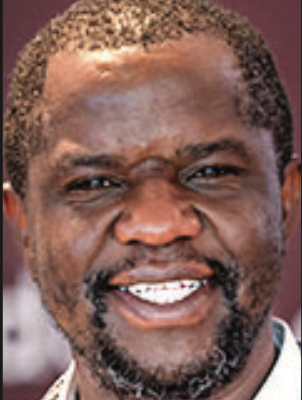
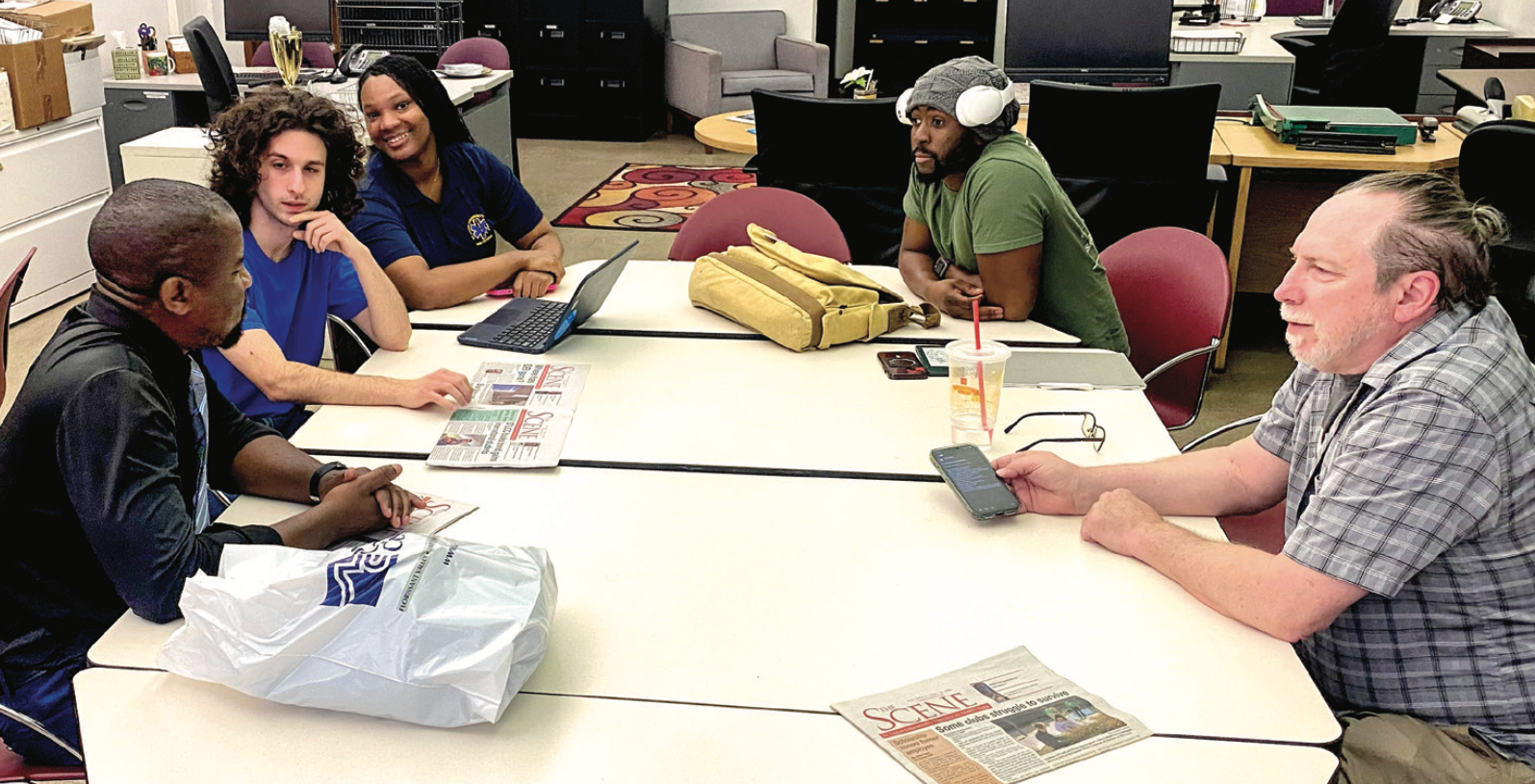
Chitete gave presentations to classes and met with faculty members, administrators and student groups, including staff members at STLCC’s three student newspapers. He was at Forest Park on March 26.
“He was real interesting and real passionate about his journalism,” said fine arts major Jaccob Watson, 33, a cartoonist for The Scene.
Chitete is a Fulbright scholar in the Hubert Humphrey fellowship program, which is funded by the U.S. State Department through Arizona State University. Such fellows are required to connect with journalists at community colleges in the United States as part of a Community Residence Program.
The Fulbright Scholarship is a 10-month program that brings professionals from other countries to the United States to educate and learn.
Malawi is a country in southeastern Africa that’s been a democracy since 1994. Freedom of the press exists, Chitete said, but reporters have a difficult job because public data isn’t readily available, authorities aren’t as forthcoming and citizens are reluctant to speak out on many issues.
“We are in a place where everybody fears the government,” he said. “You have to be politically correct all the time.
“So public officers, even when they’re legally empowered to give out information, based on the constitution, which provides access to information and access to information law, they are not going to do that. They have to think politically.”
Chitete said journalists in Malawi must use non-traditional techniques to get information and rely more on “undercover” work, leaks and anonymous sources. He calls that “beating the streets.”
Chitete described an entrenched system that includes authorities who often don’t want the public to report the truth. That’s part of what attracted him to the field of journalism in the first place.
“I looked at journalism as a way of telling our story, the sad story about our society,” he said. “There’s so many injustices in our country, (and) I’ve been at the abusing end of those stories.
“Lack of women’s voice, people don’t have rights, and all the governments are too powerful (and) there’s corruption. So, I looked at journalism as a vehicle to tell a story that empowers.”
Chitete studied journalism and communications at University of Malawi. He’s been working in radio, television and public and private print and digital media since 2005.
Chitete serves as assistant bureau chief for Nations Publications Limited and formerly worked as a reporter for Malawi Broadcasting Corp. He also has freelanced for international organizations such as the BBC, Aljazeera and China Global Television Network.
Chitete praised the United States for its democracy, positive influence and financial help to Malawi.
“When we talk about journalism, we also learn from the U.S. because of your long history in terms of journalism,” he said. “The U.S. has been able to influence democratic governance in Malawi. The U.S. has been a huge support.
“The legal framework (of the Malawi press) is modeled by what some would think would be the best democracy in the world, the U.S.”
Chris Sulimcevski, coordinator of international student affairs, served as Chitete’s tour guide during his weeklong visit to STLCC campuses. He described it as a great opportunity for students.
“This guy is a really big deal in Africa when it comes to journalism,” he said.
Students interested in studying abroad or other international programs should contact Sulimcevski at 314-644-9671 or stop by his office in Student Center Room 245 on the Forest Park campus.