
By Andrew Gausch
The Scene staff
College life is stressful, and the folks at Campus Life are betting that meditation can help students at Forest Park.
This semester, they’re offering meditation sessions for those who want to escape the real world of jobs, classes, boy drama, girl drama, parental pressures, bills and other challenges of life.
“(Meditation) gives a chance to stop and breathe, refocus, clear the mind towards positivity,” said Student Activities Specialist Warrene Cherry, who regularly meditates.
The idea for meditation sessions at Forest Park came from Tanya Carr, another student activities specialist, who had already been meditating on her own. She and Campus Life Manager Donivan Foster decided to put sessions on the sched[1]ule so that students could join in.
“They can come and go as needed,” Foster said.
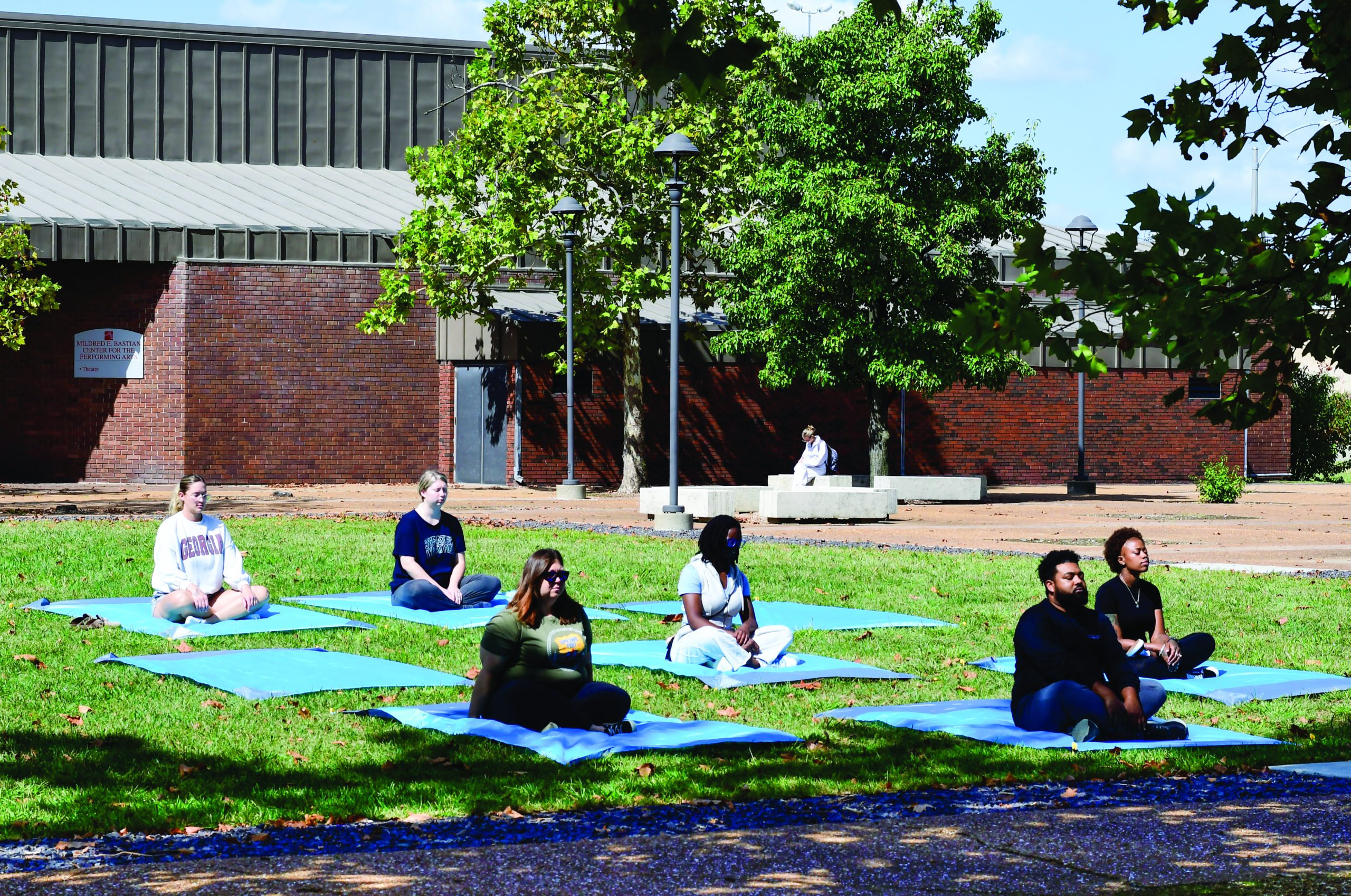
Campus Life held the first session on a beautiful fall day in late September in a grassy area of the courtyard. More than half a dozen students, faculty and staff showed up. The college provided bright blue yoga mats.
Audio instructions from YouTube videos guided the session. They included “Guided Meditation for Detachment from OverThinking (Anxiety/OCD/Depression)” by Michael Sealey and “Guided Meditation: Being Here, with Tara Brach.”
Campus Life also provided a booklet by Brach entitled “How to Meditate FAQ.” She explains how to establish a practice, get down to the basics and confront challenges. Brach also introduces the concept of “RAIN,” which stands for recognize, allow, investigate and nurture.
“(This) is an easy-to-remember tool for practicing mindfulness, one that you can access in almost any place or situation,” she writes. “It has four steps that will help you related skillfully with difficult emotions that arise.”
Many young people, including college and university students, are stressed out, according to a long list of studies.
The World Health Organization recently reported the following:
- Globally, one in seven youths aged 10-19 experiences a mental disorder, accounting for 15% of the global burden of disease in this age group.
- Depression, anxiety and behavioral dis[1]orders are among the leading causes of illness and disability among adolescents.
- Suicide the third leading cause of death among those aged 15–29 years old.
- The consequences of failing to address adolescent mental health conditions extend to adulthood, impairing both physical and mental health and limiting opportunities to lead fulfilling lives as adults.
Campus Life is offering two more meditation sessions, which are free for students, faculty and staff. They will be held at noon on Nov. 19 and Dec. 12 in the yoga room (Room 102) of the P.E. building. For more information, contact Carr or Foster.