By Robbie Chamberlain
The Scene staff
St. Louis Community College is bucking a national trend this semester by making gains in the number of international students on college visas and their percentage of total enrollment.
College and university campuses around the nation are experiencing a decline in international student enrollment. Many people blame Trump administration policies viewed as hostile to immigrants and foreign visitors.
In contrast, STLCC has 276 international students on college visas (also known as F1 visas) this semester, an increase of 65 over fall of 2024. Total enrollment has increased about 10%.
Robert Bedell, associate director of enrollment and head designated school official for international students, attributes the increase in F1 students to STLCC’s low tuition costs compared to four-year universities in the area.
“We have had a lot of transfer-ins from other institutions,” he said. “So what I think is happening is they have a similar perspective on cost of college once they get here.”
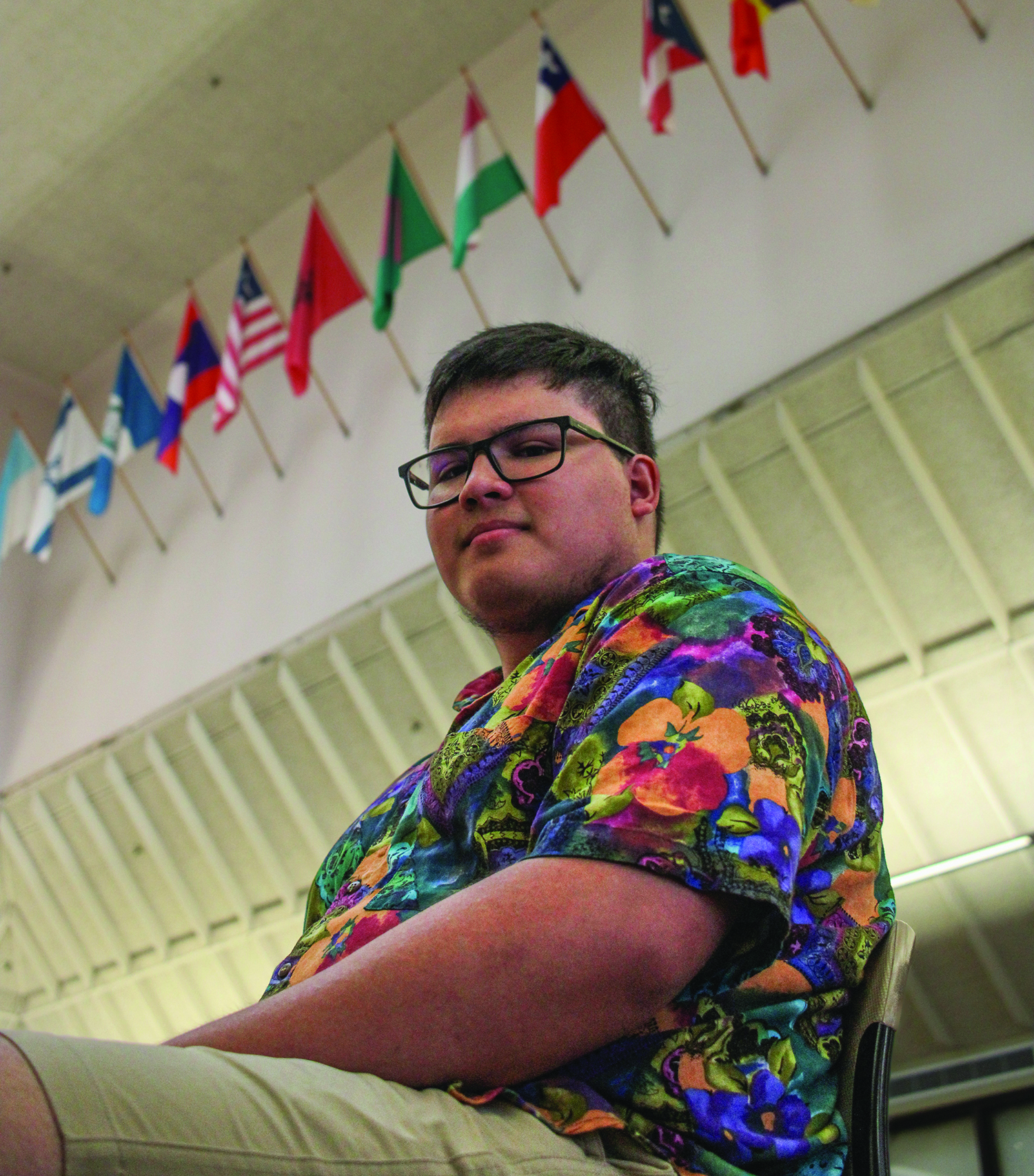
That theory was backed up by Francisco Ramos-Saez, an F1 student from Chile who is studying paramedic technology at Forest Park. He said cost and location prompted him to enroll at STLCC.
Ramos-Saez is aware of the political climate in the United States regarding foreigners, but he doesn’t worry about being deported or having his visa revoked as long as he’s following F1 guidelines.
“Sometimes I have a little concern, but I try to take it easy,” he said. “As I know that I am in another country, I have to follow certain rules. … I know I’m not doing something bad. But if one day, the government says ‘F1 visas have to go,’ I will have students on college visas and their percentage of total enrollment.
On June 4, President Donald J. Trump made a proclamation suspending or restricting visa issuance for citizens of 19 countries in West Asia, Africa and Latin America.
The federal government also suspended student visa interviews during the critical window of May 27 to June 18 and expanded its vetting of international student social media.
“The United States must ensure that admitted aliens and aliens otherwise already present in the United States do not bear hostile attitudes toward its citizens, culture, government, institutions, or founding principles, and do not advocate for, aid, or support designated foreign terrorists or other threats to our national security,” the proclamation stated.
More recently, the U.S. Department of Homeland Security has proposed changes that would cap the period of study for F1 students to four years and prevent them from changing their programs.
Ramos-Saez said it was a “miracle” that he was able to get a visa interview this summer and enroll at STLCC in the fall.
“In the first moment, I had an interview for September,” he said. “But we were every day looking for the page to (update), and so then I saw there were interviews for July, then I saw one in June and applied for June.”
Other international students haven’t been so lucky, according to Beverly Owusu, a general transfer student from Ghana with an F1 visa.
“(A friend) did apply and then he got a date, everything was scheduled, and they sent him an email that they changed his time, and I think that it was the following year,” she said.
“So now he has to defer to spring semester and come probably on Jan. 1.”
Many colleges and universities are feeling the negative effects of declining international student enrollments, including a reduction in tuition revenue. F1 students must be full time and pay extra tuition.
Some schools, such as DePaul University in Chicago, have announced budget cuts to offset losses from a 30% decrease in international student enrollment.
Southern Illinois University Edwardsville, which is across the Mississippi River from St. Louis, saw a 23% drop in international students this fall from 2024.
STLCC had 151 international students with F1 visas in the fall of 2019, making up 0.87% of total enrollment. That dropped to 103 in fall of 2020, after the COVID pandemic hit (0.67%). Since that time, a rebound has included steady increases every semester.
Bedell’s role as head designated school official (DSO) is to oversee the enrollment of international students around the district, coordinating with DSOs on each campus to ensure compliance with the government’s visa requirements.
Bedell and his team worked to streamline the application and enrollment process for international students in case their enrollment continued its rise this semester.
“I don’t think it totally caught us off guard,” he said. “When we realized it was happening, we were able to create a plan and make sure we were creating clear lines of communication and timelines for when documentation was needed to be in (for) those students, because we knew we had an increased level of traffic.
“When we see an increase from a given school in the area, you just want to make sure that transition period is as clear as possible for both the other school and for us, and for the student.”
Forest Park has long been recognized as a campus full of diversity with students attending from all over the world. That is illustrated by a colorful flag display in the cafeteria.
Whether STLCC will continue to gain international students in the coming months and years remains to be seen.
Either way, F1 students are expected to continue contributing to the college’s culture and success.
“Anyone who goes through the process of becoming an F1 student is going to be motivated to be successful, because there’s a lot to the process,” Bedell said. “They’re excited about it. They want to be engaged.
They’re usually pretty intentional about it once they’re here.”