
 By Sky Tucker
The Scene staff
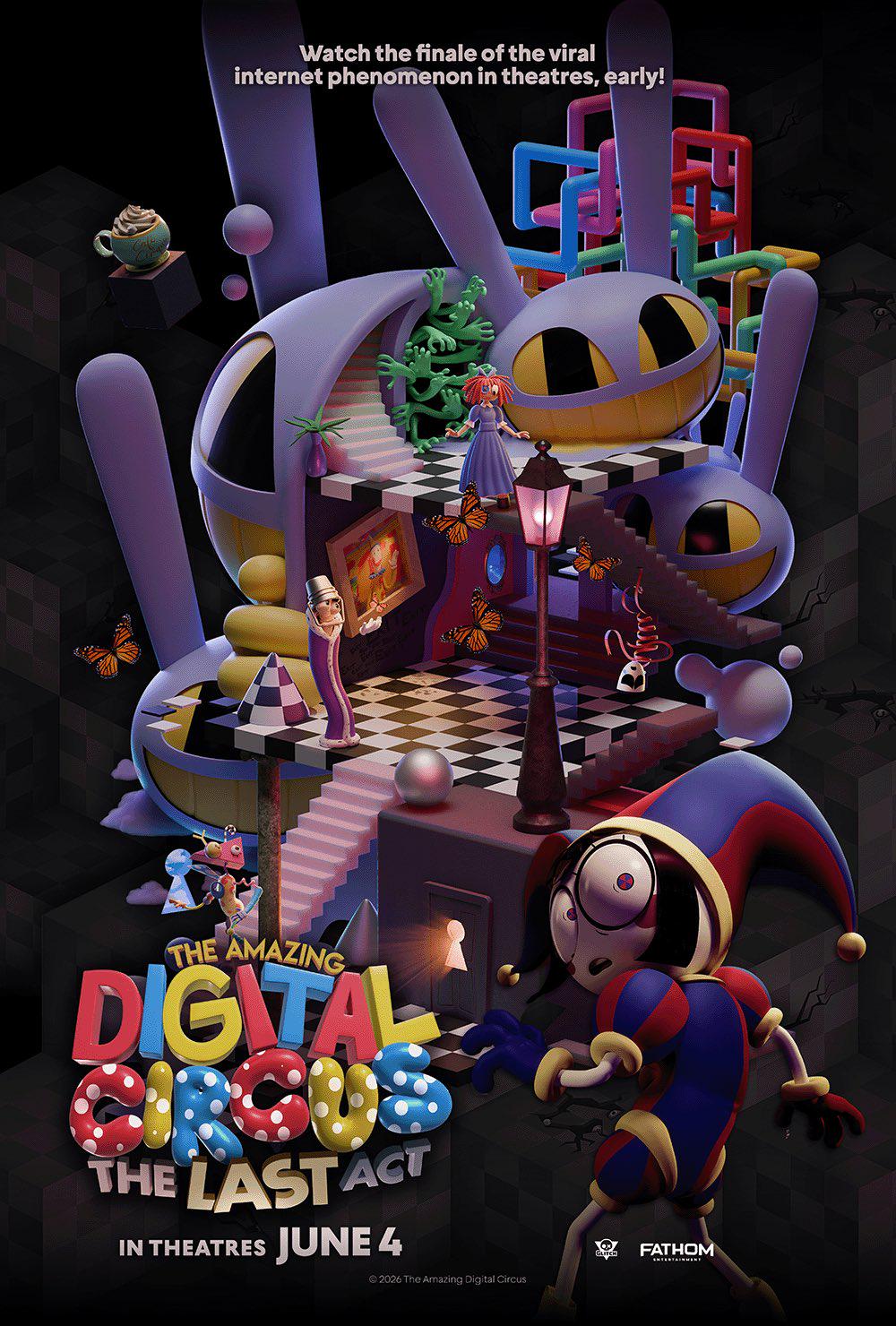
When I learned that the indie animation series “The Amazing Digital Circus” was ending with a two-part finale, “The Last Act,” and that it would premiere in theaters on June 4, two weeks before its Netflix and YouTube release, I knew I had to act quickly, eager to avoid spoilers. Especially after the episode leaked on May 19 via an anonymous Brazilian user.
Luckily, I got to go in blind on June 8.
I don’t see myself as a critic, but I felt compelled to write a review on Rotten Tomatoes after processing what I watched. I gave “The Last Act” 4.5 stars. I wrote that it was “an absolutely stunning final installment to the indie animation series” and described it as “heart-wrenching.” I also included its rewatch value, recommending that others see it.
While the show’s ending received praise, many fans felt bitter that it didn’t validate their headcanons. They said the series was “ruined” by “bad writing” and Gooseworx’s “disinterest.” One fan stated that she “fumbled” after she “stopped giving a shit,” overlooking the frustration caused by her fanbase’s toxicity.
There were also heated arguments surrounding the purple bunny character, Jax. Some fans were aggravated that he was confirmed as a secondary protagonist, while others raged over the apparent confirmation of the “Jax is Transgender” theory, ridiculing those who connected with the character via queer readings.
Meanwhile, some groups were outraged that the theme wasn’t explicitly stated. Others rejected the theory outright, despite the subtext in the finale and its merchandise.
That said, Gooseworx, a trans woman, stated that the antagonistic caricature was a self-insert. Given that and the series’ themes, it can be argued that Jax reflected who she might have become if she hadn’t lived authentically, rather than a direct portrait of her true self.
This refusal to read into things isn’t unique to “The Amazing Digital Circus” (TADC), as people often blame “bad writing” when stories don’t meet expectations, rather than question their own media literacy.
Unfortunately, this isn’t isolated to fandom subculture; it’s prevalent in our culture as a whole, with modern algorithms, echo chambers and doomscrolling shortening attention spans and eroding critical thinking.
But if you revisit TADC now, with the full series available, the narrative remains consistent. The only thing preventing it from being considered a masterpiece is the fandom itself, which is unable to see the world through any lens but its own.
After all, what we resonate with shapes what we notice. Consider this: I wasn’t aware of how large the Chinese community was in St. Louis until after I joined Rednote (XHS) and began learning the language. It’s common to be unaware of a community or narrative when you lack the frame to see them, but that unawareness doesn’t mean they don’t exist.
The same applies to queer readings of works like “The Great Gatsby.” For over a century, the homoerotic tension between Nick and Gatsby flew over the heads of readers without a queer lens. Cultural nearsightedness reframed queer relationships as “friendships” or “roommate” situations throughout history, as with Abe Lincoln and his “closest companion,” Joshua Speed.
As for what it means to be a “bad writer,” do we actually know what ‘good’ writing is, or have we just weaponized this term to label anything we personally dislike? That conflation of discomfort with poor craftsmanship is both lazy and inaccurate.
At the end of the day, while the backlash says more about the fandom and its refusal to see what was always there, Gooseworx achieved her goal and wrote a cohesive narrative on psychological struggles and how people can either learn to cope or give in.
If you can take a moment to inch away from superficial tropes, to dive just a little bit deeper, you might find that some of the most honest stories don’t tell you what to think, but rather make you feel seen. And that’s something I can appreciate as a nonbinary person dealing with my own internal struggles.