By Robbie Chamberlain
The Scene staff
Forming a new club at Forest Park is a simple process, but keeping it afloat can be tricky.
Just ask presidents and advisers whose clubs have folded after only a few semesters.
That happened to Latinos Unidos, a Hispanic club formed two years ago by student Christian Romero, who recruited biology professor Rafael Hernandez as faculty adviser.
This semester, Romero switched his focus and stepped down from leadership, according to Hernandez. The club later deactivated.
“(After the first meeting) we had two more meetings with no success,” Hernandez said. “Maybe three people showed up, and that was it. So I told another person, ‘I am putting too much time into this, taking time from work like grading exams.’ So after the third meeting, I had to put my involvement on hold.”
Hernandez said Romero has expressed interest in reviving the club, but that hasn’t happened yet.
There are other clubs that cater to student interests, such as ceramics, gardening, cybersecurity, health sciences, automotive technology and journalism.
Some have survived for many years, perhaps because they’re associated with departments, or they have dedicated advisers who stay involved year after year. Newer clubs, particularly those that are interest-focused, often face problems retaining members who juggle busy schedules and don’t have time to attend weekly meetings or participate in activities. Many graduate after two years.
“We’re a commuter campus, so (students) come, they go to class, and they leave,” said Tanya Carr, student activities director in the Campus Life department.
“A lot of people work, a lot of people have families outside of here, so they’ve got other obligations, and I do think it tends to affect our participation in clubs.”
Three weeks to file paperwork
At least five students and one faculty adviser are needed to form a club at the beginning of a semester. They have three weeks to file paperwork with Campus Life, submitting a constitution, list of members, activities and meeting times, dates and places.
Campus Life and the Forest Park Student Government Association regulate clubs and continually assess their health, said Calvin Carson, general studies transfer student and Student Government Association vice president.
Freshman accounting student Ximena Avilez hasn’t joined a club, but she sees their value.
“I think it’s good to have like-minded people who like some of the same stuff to be able to come together,” Avilez said.
“I think some people have issues communicating with others and building those relationships.”
The number of clubs at Forest Park averages about 20 each semester, according to Carr.
Carson believes that students still like the idea of joining a club, but fewer are willing to take on leadership roles.
“I’d say that we’re seeing a decrease in students wanting to lead clubs because they don’t want that responsibility,” Carson said. “You’re really putting in a lot of effort because you’re truly passionate about what the club is focusing on, but there’s not a lot of rewards or benefits besides being passionate about it to justify the input.
“I would make the correlation between the decrease in students wanting to lead clubs to a decline of certain clubs’ presence on campus. They’re not doing as much as they used to be doing, or they just fizzle out entirely.”
Sometimes clubs have trouble finding faculty members who have time to serve as advisers.
The International Club was one of the most stable clubs at Forest Park for years, but it deactivated this semester after the retirement of longtime adviser Keith Hulsey, who taught English as a second language.
“Sometimes there are people who are very excited and invested, and they go out and recruit people for the club,” Carr said. “Sometimes the members or the president aren’t so outgoing or don’t have the time to put into the club.”
Promotion can be a challenge
Campus Life sponsors a club expo at the beginning of each semester, and the St. Louis Community College website has a list of clubs for each campus.
However, that list is often incomplete or out of date. It’s partly because Campus Life can’t directly edit it and must go through another department, according to Carr.
Otherwise, the burden of promoting clubs generally falls on members and advisers, and that’s not always easy.
Carr and Carson said the STLCC marketing and communications department heavily restricts club promotional materials, and that hinders recruitment.
“Marketing is very restrictive on club stuff,” Carson said. “It’s actually kind of interesting because if you went to a four-year non-religious institution, you would not see this level of scrutiny and restrictiveness on club marketing materials.”
Jason Young, coordinator of marketing and communications at Forest Park, said the idea that the department interferes with club promotions is “wrong.”
“We have zero input on such matters, aside from having told Campus Life that the non-discrimination language needs to be included on fliers and that fliers should use accessible typography and colors,” he said.
Young said STLCC policy limits each club to 10 fliers or posters around campus and requires materials to be displayed only on bulletin boards and not on walls, doors, windows or tabletops.
Young referred further questions to Jessie Oppenheim, district manager of enrollment systems and communications. She didn’t respond to requests for comment.
Designs for club posters, fliers and other promotional materials must be submitted to Campus Life and approved by Carr and Oppenheim. Campus Life Manager Donivan Foster described Oppenheim as a “liaison” between his department and marketing.
Foster said the only thing posters and fliers need is a non-discrimination statement and that the approval process simply ensures that designs are coherent and relevant to the club.
“Clubs are welcome to be as creative as they want to,” he said. “There’s just a couple things, that statement, and we just do another set of eyes to make sure everything is aligned and spelled correctly.”
Carr said advertising on campus is problematic, not just for clubs, but for events, too. She believes a space dedicated to student promotions would benefit club participation and advertising prospects.
Word of mouth has lost some power in a post-COVID landscape, according to Carr.
General transfer student Octaviah Johnson said she’s never seen any advertisements for clubs on the Forest Park campus.
“I’ve thought about (looking into clubs), but I just didn’t know what was out there,” she said.
Room lost to construction
Ongoing construction is another factor that has hurt the ability of clubs to operate this semester, according to Carr. It has restricted the amount of space available for promotion and activities and pushed at least one club out of its meeting space.
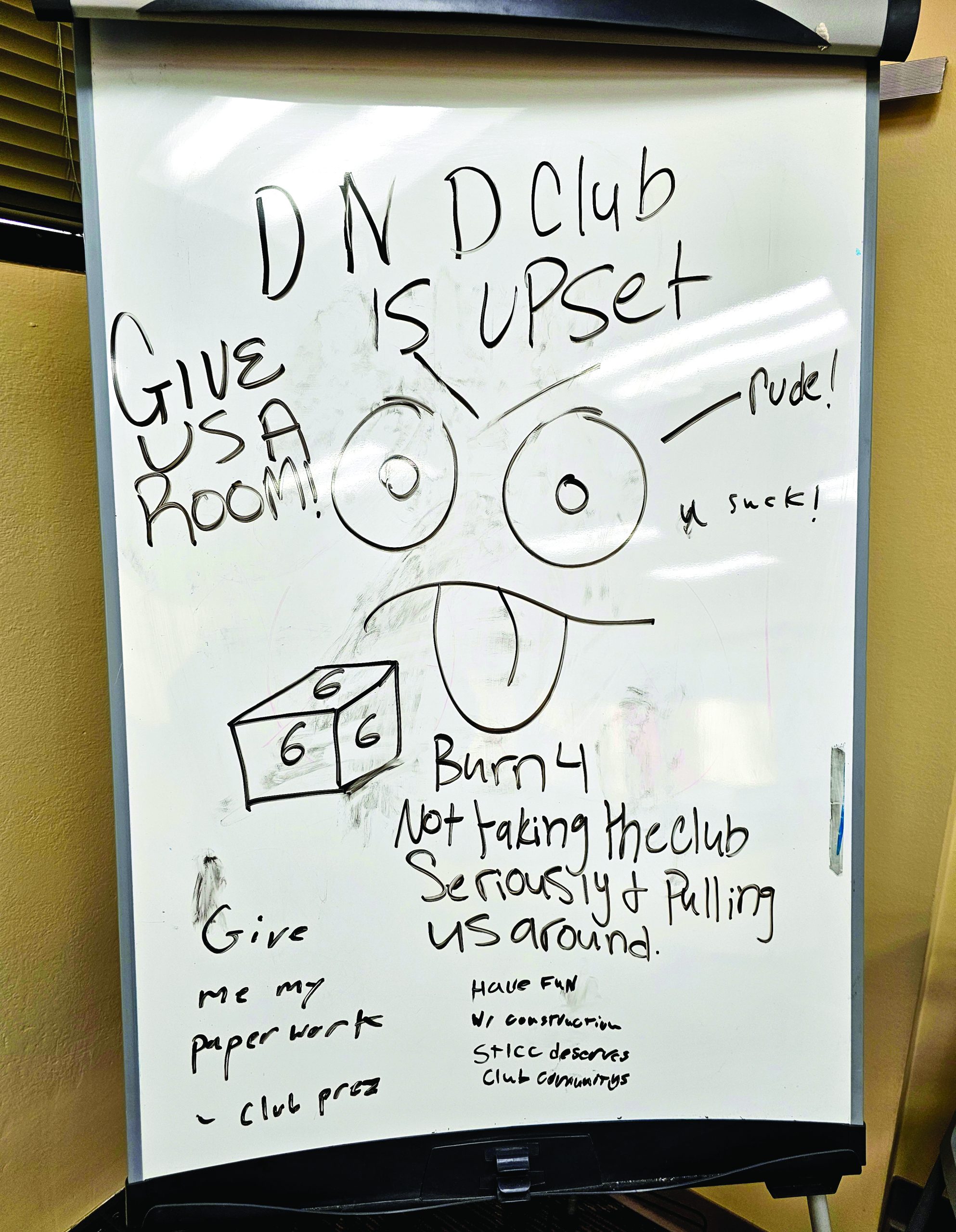
The Dungeons & Dragons Club met in a Student Center conference room until the middle of fall semester, when members suddenly learned that they had been kicked out due to construction.
“We’ve had that room a year and a half,” said President Cody Peace, a culinary arts student. “I legitimately showed up and was doing my errands for regular classes, and Latoya told me, ‘Hey we don’t have the room anymore.’ It was literally last minute, the day before we had club.
“We were devastated. We really liked meeting up consistently for club meetings. It’s just an environment for us to creatively explore communitive storytelling.”
Thankfully, Carson was able to quickly hook them up with space in the East Wing Interactive Learning Center. Peace said club members rejoiced after this quick turnaround.
“We were relieved,” he said. “We were very excited, and we were able to use the space very nicely. We respected their boundaries, trying to make it as nice as possible.”
Providing sense of community
Clubs are a great way for students to expand their social circles and get involved in the school community, according to members and campus officials.
“With my experience in school and other things, when you’re involved, you’re more apt to stay and finish or to continue in your education,” Carr said. “Whenever you’re just coming and going and don’t really have any connections on campus, it’s easier for you to drop out or just let it go.”
“Clubs are a part of the campus’ vitality,” Foster said. “Students want to see students.
When clubs are active, when students are active, that absolutely helps with the vitality of the campus and giving that sense of community.”
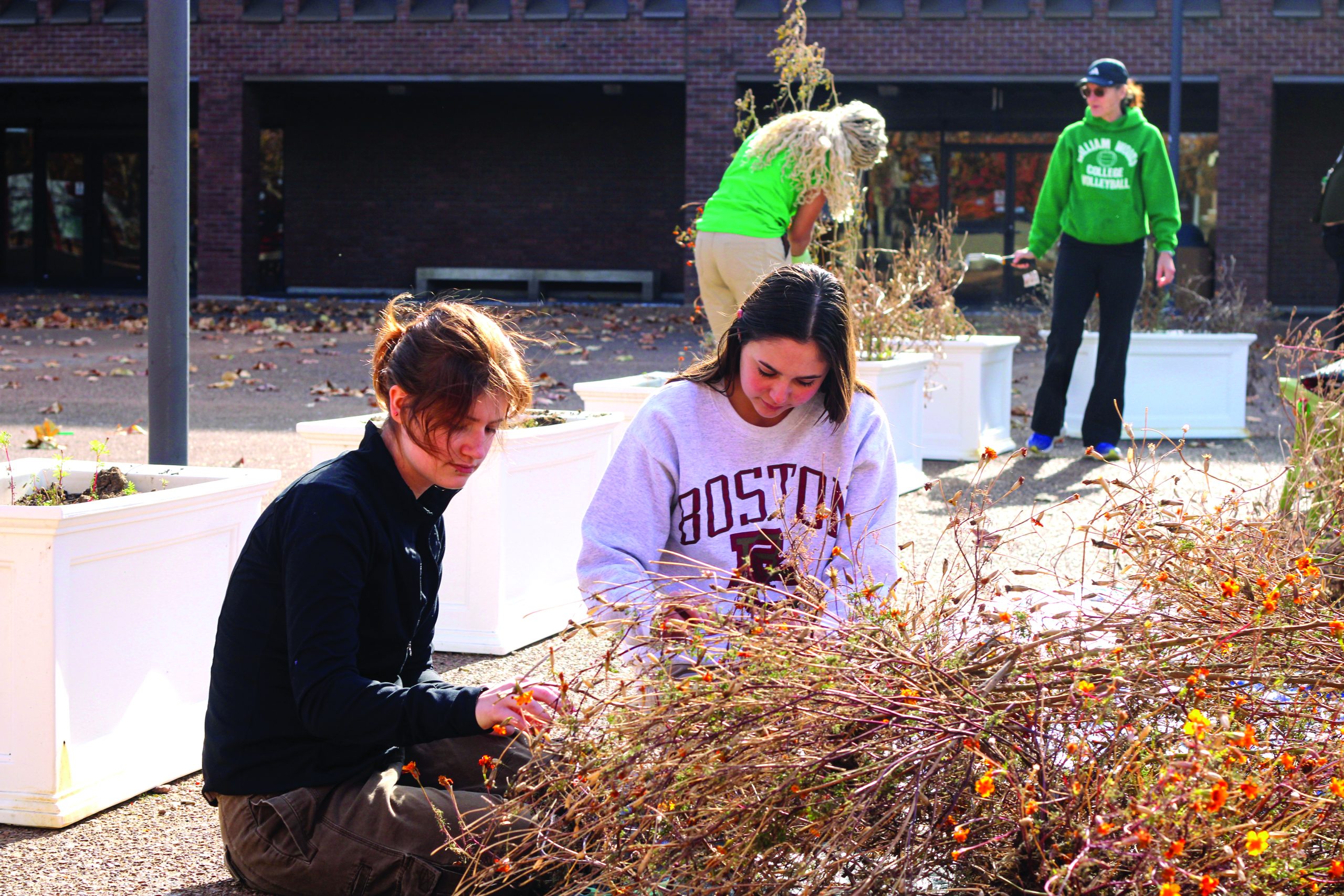
The Garden Club formed last spring and has 13 members this semester. They recently worked on flowerbeds outside the theater building, pulling weeds and harvesting herbs before cold weather set in.
Secretary Juliette Grill, a general transfer student, said club involvement has helped give her a sense of community on campus.
“Being at a community college is kind of difficult,” she said. “You go to classes with a lot of people of different ages. It’s kind of hard to find people into the same stuff as you are.
“With the garden club, I can learn stuff but also continue to make friendships here. And even though they’re not my best friends, they’re still people I know here. It’s sort of like a community.”
Editor’s note: This story has been updated to correct an error and make a clarification. Clubs are limited to 10, not five, posters or fliers on campus. Also, changes were made to clarify that the marketing and communications department disputes the claim that it heavily restricts promotional materials. The Scene welcomes feedback, positive and negative, and strives to be as accurate and fair as possible.